
On enaspot.com I often publish small experimental projects that explore new possibilities in AI in e‑learning and modern instructional design. These prototypes are not full products. They are concept previews that show how emerging technologies can enhance digital learning experiences.
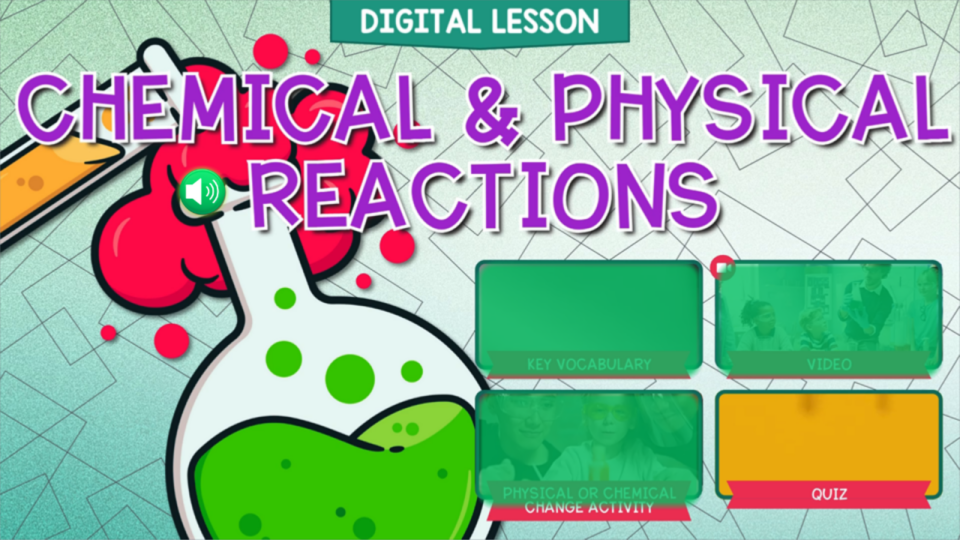
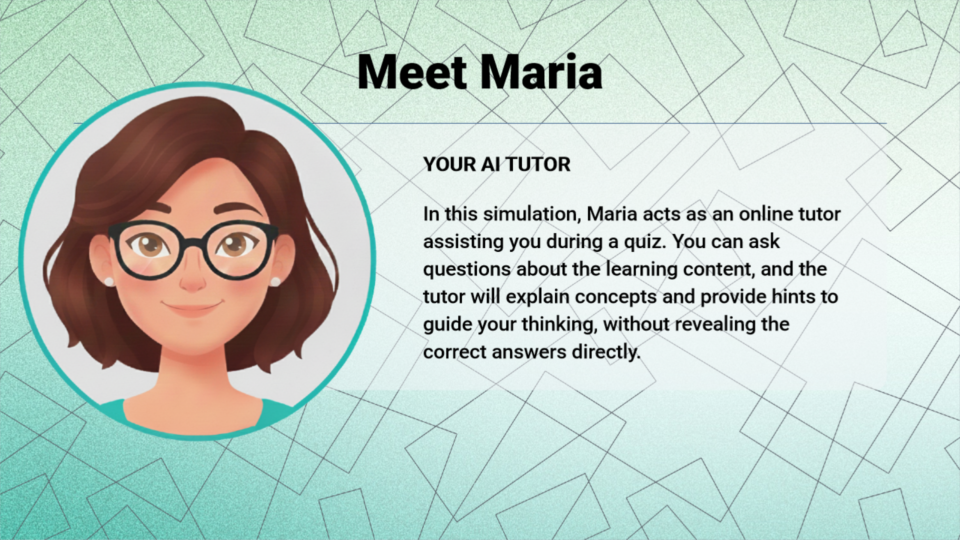
This experiment focuses on integrating an AI tutor directly inside an e‑learning quiz. The course module covers physical and chemical reactions, and the AI assistant helps learners think through quiz questions rather than simply revealing the correct answer.
The prototype was developed using Articulate Storyline 360, while the AI capability is delivered through a Cluelabs AI widget embedded inside the course. The goal is to demonstrate a practical example of AI-powered quiz assistance in e‑learning.
The Concept: AI Support During a Quiz
Traditional quizzes in e‑learning courses usually follow a simple pattern. Learners select an answer and receive a “correct” or “incorrect” message. While this measures knowledge, it does not always support learning during the assessment.
This prototype explores a different approach: AI tutor support inside the quiz itself.
While answering questions, learners can open the AI widget and ask for help. Instead of revealing the solution, the AI provides hints, explanations, and guiding questions. The intention is to replicate the type of guidance a human instructor might provide during problem solving.
This approach works particularly well for science topics such as physical and chemical reactions, where learners must interpret evidence such as energy release, color change, gas formation, or the creation of new substances.
Rather than encouraging guessing, the AI tutor helps learners revisit the underlying concept from the lesson.
Technical Architecture
From a technical perspective, the architecture of the solution is intentionally lightweight.
The core learning experience is built in Articulate Storyline 360, including the lesson content and the quiz interactions. Storyline handles navigation, scoring logic, and the presentation of the learning module.
The AI layer is added through a Cluelabs widget, which can be embedded directly into the Storyline player as a web-based component. The widget functions as a small assistant panel that learners can open while interacting with the course by typing, but also with a voice command.
At a high level, the architecture includes three main components:
1. Storyline Course Layer: The Storyline project contains the course content, quiz questions, and user interface. Standard Storyline triggers and variables manage the learner’s progress and quiz responses.
2. Embedded AI Widget Layer: The Cluelabs widget is inserted as a web object or embedded component within the Storyline course. This widget provides the conversational interface where learners interact with the AI tutor.
3. AI Processing Layer: Behind the widget, the AI processes user questions and generates responses based on the content it was trained on. The widget sends learner prompts to the AI service and returns the generated guidance directly inside the course interface.
Because the widget runs inside the course environment, the learner experiences the AI tutor as a natural part of the module rather than as an external tool.
Controlled Knowledge for the AI Tutor
A key design decision in this prototype is that the AI tutor only uses the content from the course module.
Instead of relying on general internet knowledge, the AI was fed with the instructional material from the lesson about physical and chemical reactions. This creates a controlled knowledge environment.
There are several advantages to this approach:
- The AI explanations stay consistent with the course content.
- Learners receive guidance that matches the instructional design.
- The AI avoids introducing information that was never presented in the course.
In practice, the AI behaves like a digital teaching assistant trained specifically for that module.
Guiding the Learner Toward the Answer
The central design principle of the AI tutor is simple: guide rather than answer.
When a learner asks for help during a quiz question, the AI does not reveal the correct option. Instead, it provides prompts that help the learner think through the problem.
For example, when identifying a chemical reaction, the AI might encourage the learner to consider:
- Whether a new substance is formed
- Whether atoms are rearranged
- Whether the process represents a change of state or a chemical transformation
This style of response transforms the quiz into a guided learning moment rather than a simple assessment.
Why AI Tutors in E‑Learning Matter
This small prototype demonstrates how AI tutors in e‑learning courses can enhance quizzes without replacing instructional design. Instead of acting as a shortcut to the answer, the AI becomes a learning companion embedded directly inside the course.
For complex subjects such as chemistry, physics, or engineering, this type of AI-powered learning support can help learners connect theory with problem solving while they are still engaged with the question.
Experiments like this help explore what the future of AI‑enhanced e‑learning experiences might look like.
If you are exploring similar ideas or are interested in collaborating on experimental AI learning solutions, feel free to reach out.